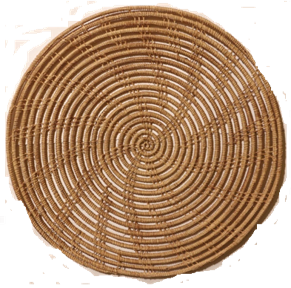
What is date‑palm/palm leaf?

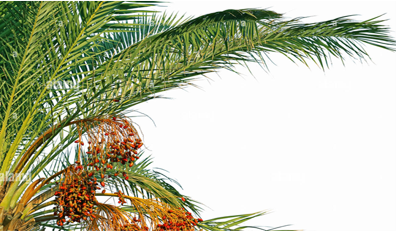
The date palm (Phoenix dactylifera) and related palms are evergreen trees that thrive in hot, arid climates. Their long, fan‑like leaves (fronds) are tough yet flexible, with a fibrous midrib and leaflets that can be dried and split into strong strips. The leaves are a renewable resource; once the edible fruits are harvested, the fronds are pruned and used to make useful objects. In South Asia, the Middle East and parts of Africa, people have been weaving and coiling palm fronds for centuries. The craft is eco‑friendly because palm leaves are biodegradable and require minimal processing compared with industrial fibres.

Key characteristics

  • Durable & lightweight – Dried palm fronds retain strength while being light enough for everyday use. They can be plaited or coiled without breaking.
  • Natural & biodegradable – The material is derived from the leaf, so finished products return to nature at the end of their life.
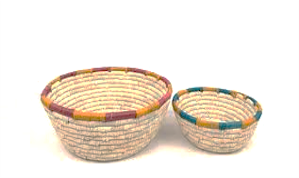
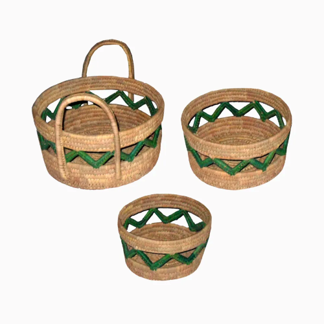
  • Versatile & decorative – Palm fronds can be left natural or dyed in various colours and woven into intricate patterns antimakhanna.com . Their golden hue gives a warm, earthy look.

How palm‑leaf products are made

  • 1. Harvesting & drying – Large palm leaves are harvested after the fruiting season. In Telangana, India, artisans dry each frond in the sun for 2–3 days, then split it into three or four narrower leaves using a sharp knife asiainch.org . The split fronds may be dyed to achieve the desired pattern or colour and sun‑dried again asiainch.org . In other regions the leaves are dried and then cut into thin strips using a fingernail or blade; to make them pliable, artisans soak them in water museumofpassion.wordpress.com or, in times of drought, in camel milk.
  • 2. Preparing strips & core – The dried strips are bundled or coiled around a core. In Haryana (North India), women wind dyed date‑palm strips around a bunch of wild grasses or sarkanda leaves and secure them by threading the strip through the lower coil with a blunt needle antimakhanna.com . Men often harvest and strip the leaves, while women remove the midrib and cut the leaf into uniform widths, using a section of the midrib as a die to make regular splits.
  • 3. Weaving or coiling – Artisans use several techniques:
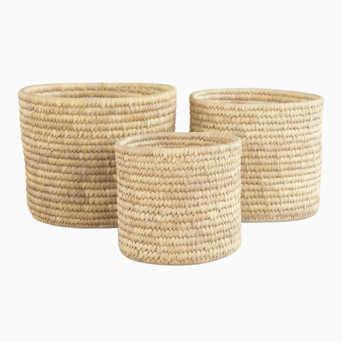
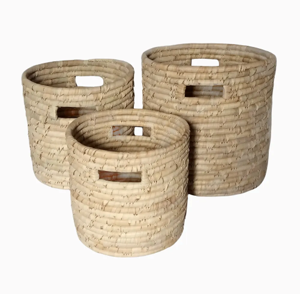
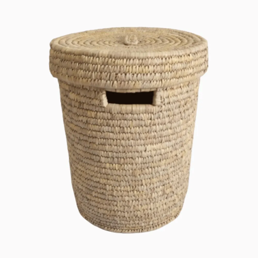
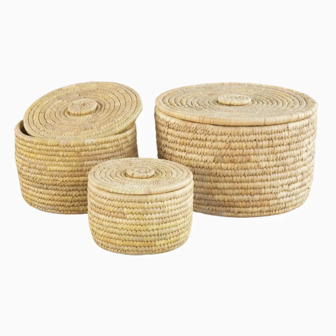
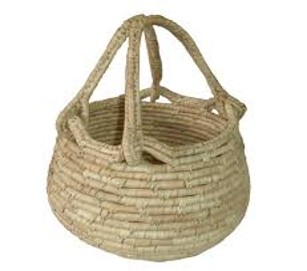
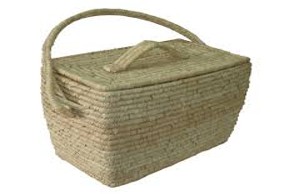
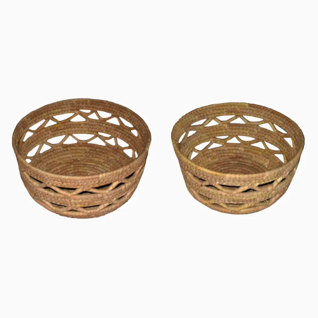
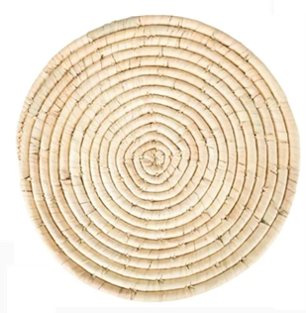
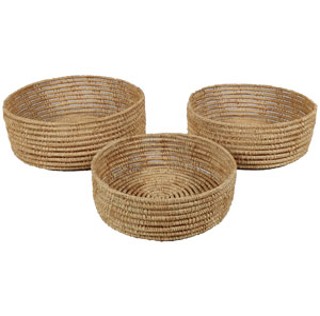
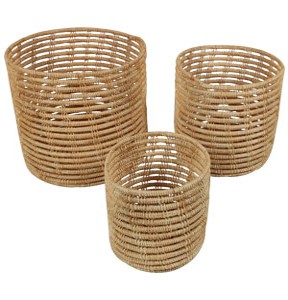
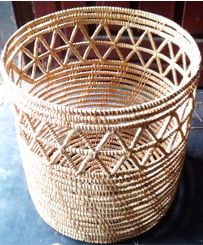
    • Coiled basketry – Palm strips are wrapped in a spiral around a core, stitched through each layer with another strip or palm fibre. This method produces round or cylindrical baskets, lidded containers and jars.
    • Plaiting – Strips are braided or interlaced to form flat mats or flexible panels. Plaited panels can be shaped into bags or large storage containers.
    • Twisting & rope making – Longer leaf fibres are twisted into rope or twine for household use. Dried fronds may also be tied together to make inexpensive brooms.
  • Finishing & drying – Finished pieces are trimmed, sometimes stiffened with glue or starch, and allowed to dry completely. Artisans may adorn them with coloured fibres or add handles and lids. Dyeing can produce vivid shades such as purple, green or red, but many craftspeople leave the natural colour for an earthy aesthetic.

Industrial processing generally follows similar steps. Harvested stalks are split or shredded, sun‑dried and twisted into rope or cordage. These cords are then woven by hand or on simple looms into baskets, mats, trays and other items. Because kans fibre cannot be easily bleached or dyed, products retain a natural beige to golden‑brown tone.

Types of products

Palm leaves are extremely versatile, enabling the creation of many functional and decorative items:

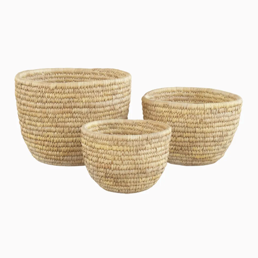
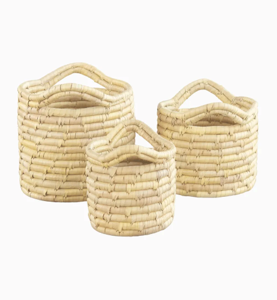
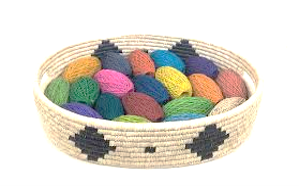
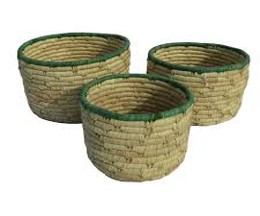
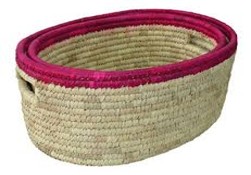
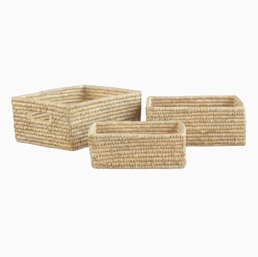
  • Baskets & containers – Coiled and plaited techniques yield round, cylindrical and shallow baskets with or without lids antimakhanna.com . Large storage bins, laundry baskets and bottle holders are common asiainch.org . In Bangladesh and India, small palm‑leaf baskets (bokis & dolchis) are used during festivals to hold offerings antimakhanna.com . Dome‑shaped baskets for storing dates (khasef) and woven fishing cages (gargour) are traditional in the Gulf region.
  • Mats & rugs – Plaited palm‑leaf strips are fashioned into mats for sitting, sleeping or praying; such mats are known as haseer museumofpassion.wordpress.com . In Oman, wide mats called mkeka or haseer are used for drying grains and food preparation. Palm fronds are also woven into dinner mats and table runners.
  • Bags & purses – Palm leaves plaited into panels are shaped into market bags, purses and pouches for betel nuts or spices antimakhanna.com . Women in agricultural communities weave palm panels into handbags, hats and umbrellas for protection from the sun.
  • Trays & household items – Palm leaf trays (al‑Surood) protect food from insects and double as serving platters museumofpassion.wordpress.com . Conical covers (maghta) are used to cover food plates museumofpassion.wordpress.com . Coasters, placemats, fans and simple musical instruments or trumpets also use palm fronds.
  • Brooms & ropes – Dried date‑palm fronds tied together make sturdy brooms antimakhanna.com , while long fibres can be twisted into rope for tying bundles or construction.
  • Other craft forms – In the Indian state of Andhra Pradesh, palmyra leaves are press‑moulded into biodegradable plates, cups and caps antimakhanna.com . Artisans also create toys, rattles and winnowing trays using a coiling technique.

Sustainability & cultural significance

Using date‑palm and palmyra leaves for crafts supports rural economies and preserves an intangible cultural heritage that has been practised for generations across South Asia, the Middle East and North Africa. Women often lead the weaving process, turning local plant materials into income and household goods antimakhanna.com . Because the leaves are renewable and biodegradable, palm‑leaf products are a sustainable alternative to plastic or synthetic fibres. The craft also holds cultural meaning: baskets and mats feature in festivals, religious rituals and daily life antimakhanna.com museumofpassion.wordpress.com . By supporting palm‑leaf crafts, consumers help keep traditional skills alive while choosing eco‑friendly home décor.