What is water hyacinth?

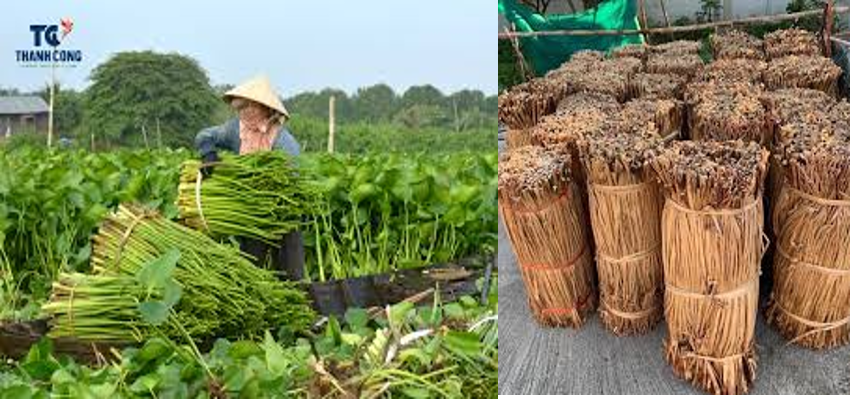
Water hyacinth (Eichhornia crassipes) is a free‑floating aquatic plant native to South America that has spread worldwide. The plant, which can reach about 3 feet in height, produces floating leaves and beautiful violet flowers fibre2fashion.com . Its rapid vegetative growth allows one plant to produce several daughter plants each week, forming thick mats that choke waterways fibre2fashion.com . These mats block sunlight and reduce oxygen in the water, harming fish and native aquatic plants fibre2fashion.com . Because of its aggressive spread, many countries consider water hyacinth an invasive weed. However, the plant also has positive qualities: it grows abundantly without the need for sowing, weeding or fertilising and requires no land space; harvesting it helps clean waterways and is effectively an environmental favour.

Fibre properties

Water hyacinth stems contain cellulose, hemicellulose and lignin, making them fibrous and strong fibre2fashion.com . When dried, the stalks become pliable and durable. The plant’s petioles and stalks are used to make ropes, baskets, mats, vases, hats, shoe soles and even stuffing for upholstery in South‑East Asia fibre2fashion.com . Because the material is natural and biodegradable, using water hyacinth reduces plastic waste and supports sustainable living.

How water‑hyacinth products are made

Artisans transform the invasive weed into functional and decorative products through a series of steps:

  • Harvesting & cleaning – Mature water hyacinth plants (often 3–4 months old) are collected from lakes, rivers or ponds. Roots are removed and plants are thoroughly cleaned thanhcongcraft.com . In some regions, harvested plants provide an important livelihood for rural communities.
  • Drying & processing – The cleaned stems are sun‑dried for several days until they become stiff and fibrous thanhcongcraft.com . Proper drying is essential; if stalks retain moisture, the finished product may rot quickly fibre2fashion.com . In some workshops, stems are flattened using simple tools or machines before weaving.
  • Material preparation – Dried stalks are sometimes rolled or twisted into rope. For example, artisans may roll dried stems around a core (often seagrass) to create sturdy ropes (rolled weave) thanhcongcraft.com or twist two or three stalks together to make thinner ropes (twisted weave) thanhcongcraft.com . Other techniques include braiding three or five stalks (braided weave) or pairing stalks in an arrow or fishbone pattern for decorative designs.
  • Weaving & shaping – To form a basket, artisans lay out stalks parallel to each other and weave perpendicular stalks through them to create a tight base thanhcongcraft.com . Additional stalks are then woven around the perimeter to build the sides, and optional handles are fashioned from loops of water‑hyacinth rope thanhcongcraft.com . Metal frames may be used to maintain shape for open patterns such as the open asterisk weave, which improves ventilation and reduces mold.
  • Finishing & inspection – Once weaving is complete, products are cleaned to remove surface dirt thanhcongcraft.com and inspected for moisture. They are stored in dry, well‑ventilated areas to maintain quality thanhcongcraft.com . Artisans may embellish finished pieces with lace, dried flowers or hand‑painted designs thanhcongcraft.com . Some designs incorporate supporting materials like bamboo, jute or cotton threads for added strength.

Types of water‑hyacinth products

Water‑hyacinth fibres are versatile. Common products include:

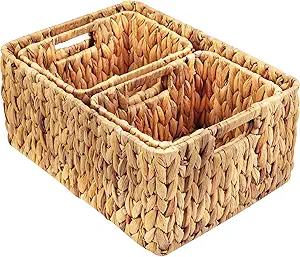
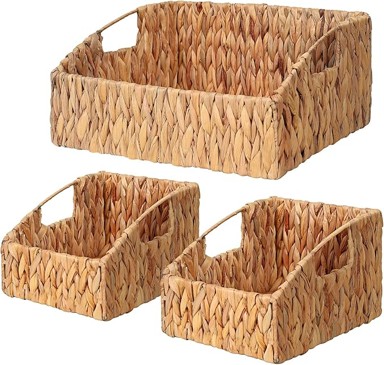
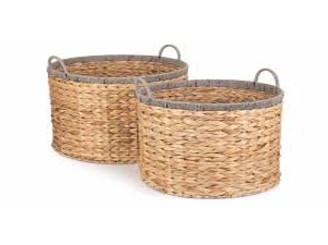
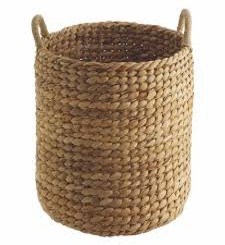
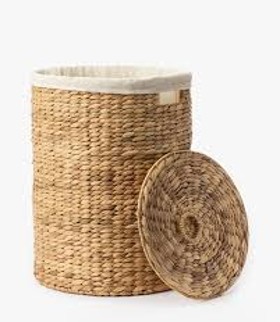
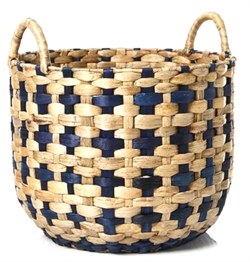
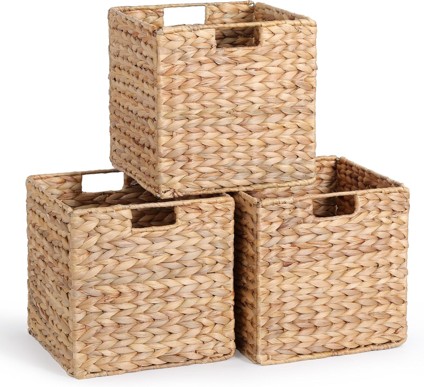
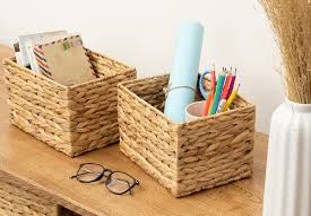
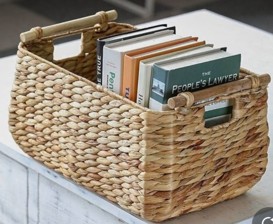
  • Baskets & storage – Handmade storage baskets, laundry bins and organisers. Rolled or twisted weaves produce robust baskets for home organisation. Artisans add lids, handles or decorative patterns according to customer preference.
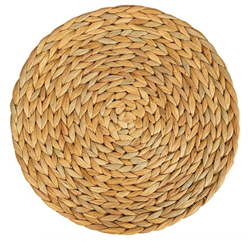
  • Mats, rugs & floor coverings – Flat woven mats are used as table placemats, floor rugs or prayer mats. Petioles woven into mats provide a natural texture and are lightweight.
  • Bags & fashion accessories – Eco‑friendly handbags, market bags, clutches, hats and purses are fashioned from braided or twisted water‑hyacinth rope trulytribal.in . These accessories are durable, lightweight and biodegradable.
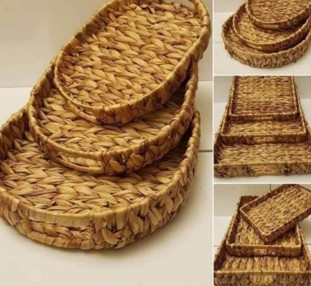
  • Home décor & furnishings – Trays, coasters, planters, lampshades, vases and wall art feature the plant’s rustic texture trulytribal.in . Water‑hyacinth rope can be wound around furniture frames to make stools, chairs, ottomans and storage chests trulytribal.in . Rope is also used in combination with cane or rattan to produce elegant furniture pieces.
  • Rope, yarn & textiles – The stalks can be shredded to expose fibres and then twisted into rope; in Bangladesh, this rope is wound around cane frames to produce furniture fibre2fashion.com . Researchers have blended water hyacinth fibres with polyester to make yarns for curtains, upholstery, table runners, napkins and clothing fibre2fashion.com . Fibre boards and paper can also be made from the plant.
  • Festive & gift items – Decorative gift boxes, plant holders, table runners and holiday decorations are handcrafted from water hyacinth trulytribal.in . Their natural aesthetic makes them ideal for rustic or minimalist décor.

Advantages and care

Water‑hyacinth products are eco‑friendly, biodegradable and renewable. They repurpose an invasive species into useful goods, supporting environmental clean‑up and providing livelihoods for rural artisans trulytribal.in . The fibres are lightweight yet sturdy, and baskets can last for several years when stored in a dry, ventilated area thanhcongcraft.com . Water‑hyacinth baskets and bags are also flexible enough to withstand exposure to water and regain shape after air‑drying thanhcongcraft.com . However, because the material absorbs moisture, products should be kept dry to prevent mold or rot.

By supporting water‑hyacinth crafts, consumers help control a troublesome aquatic weed while embracing sustainable and stylish home décor.